How Silicon Valley Was Born: The Untold Story of Its Early Pioneers
Silicon Valley didn’t begin with billion‑dollar startups, sleek glass campuses, or the myth of the lone genius coding in a garage. Its origins are far older, far messier, and far more human. To understand how this unlikely stretch of California farmland became the global capital of innovation, we need to go back to a time when the Valley wasn’t “Silicon” at all — it was orchards, defense labs, and a restless generation determined to reinvent the world.
🌳 Before the Microchips: A Valley of Orchards
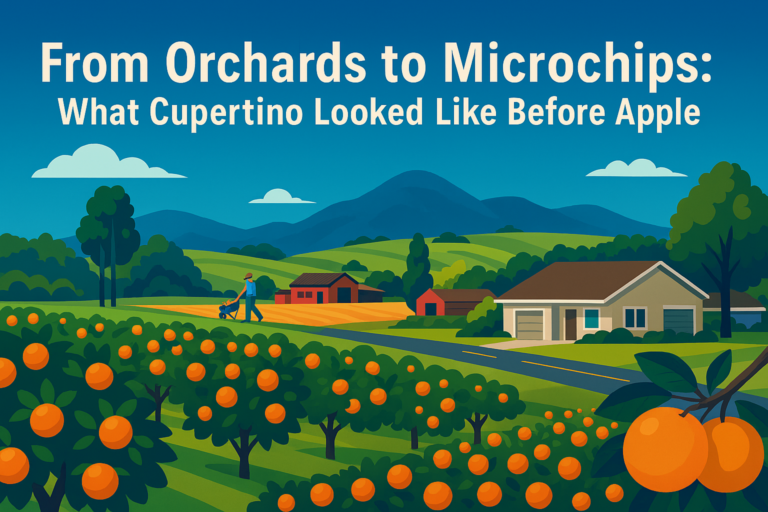
In the mid‑20th century, the Santa Clara Valley was known as the Valley of Heart’s Delight, a landscape of apricot and plum orchards stretching from San Jose to Palo Alto. Families made their living from fruit, not from code. Kids earned pocket money picking prunes, not debugging software.
Yet beneath this pastoral surface, something extraordinary was beginning to take shape.
🧪 Stanford Plants the First Seeds
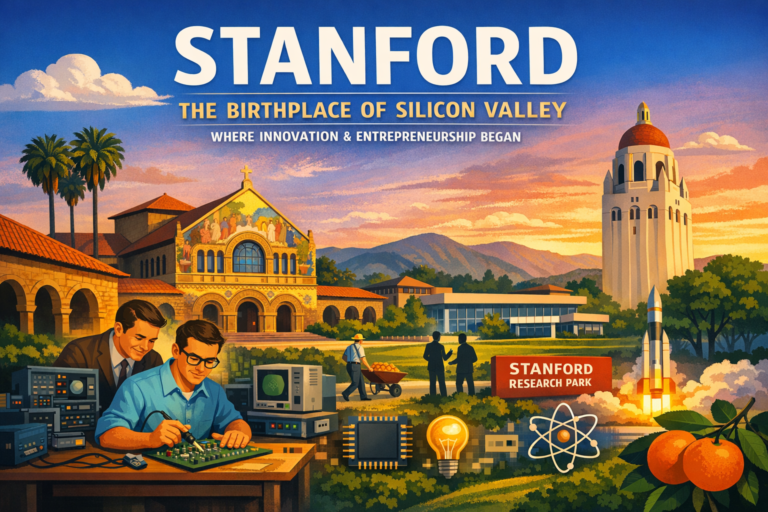
The transformation began at Stanford University, where engineering dean Frederick Terman encouraged students and faculty to turn their ideas into companies. This was radical at the time — universities were supposed to produce research, not startups.
Terman believed otherwise.
He helped two of his students, Bill Hewlett and Dave Packard, launch a small electronics company in a Palo Alto garage. That garage would later be mythologized as the “Birthplace of Silicon Valley,” but the real story is broader: Stanford created a culture where experimentation, risk, and entrepreneurship were not just allowed — they were expected.
⚡ The Shock That Started It All: The Semiconductor Revolution
The true ignition point came in 1957, when eight brilliant young engineers — later called the Traitorous Eight — walked out of Shockley Semiconductor to found Fairchild Semiconductor. Their departure wasn’t just a rebellion against a difficult boss; it was the birth of a new model of innovation:
- small teams
- fast iteration
- shared equity
- a culture of technical excellence
Fairchild became the training ground for an entire generation of pioneers. More than 30 companies — including Intel — were founded by its alumni. This network became known as the Fairchildren, and it formed the backbone of the Valley’s early ecosystem.
💻 The Counterculture Meets Computing
By the late 1960s and early 1970s, a new force entered the scene: the Bay Area counterculture. Anti‑war protests, communal living, and a deep distrust of centralized authority shaped a generation of young engineers.
Instead of building machines for the military, they wanted to build tools for individuals.
This mindset led to:
- the Homebrew Computer Club
- the first personal computers
- early video games
- the idea that technology could empower ordinary people
It was in this environment that Steve Jobs and Steve Wozniak built the first Apple computer — not in isolation, but inside a vibrant community of tinkerers, idealists, and rebels.
🧬 Innovation as a Team Sport
One of the biggest myths about Silicon Valley is that it was built by lone geniuses. In reality, innovation here has always been collaborative:
- engineers
- machinists
- university researchers
- venture capitalists
- manufacturing workers
- risk‑taking founders
They formed a dense web of relationships that allowed ideas to move quickly from lab to prototype to market.
This ecosystem — not any single individual — is what made Silicon Valley unstoppable.
🚀 Why It Happened Here — and Not Somewhere Else
Many regions had universities. Many had smart engineers. Many had government funding.
But only Silicon Valley had all of them at once, plus:
- a culture that embraced failure
- a climate that attracted talent
- a university that encouraged entrepreneurship
- a network effect that grew stronger with every new company
- a rebellious spirit that challenged the status quo
The Valley wasn’t inevitable. It was the product of vision, timing, geography, and a generation of pioneers who believed the future could be built — and that they were the ones to build it.
🌐 The Legacy of the Early Pioneers
Today, Silicon Valley is synonymous with global innovation. But its foundations were laid by people who took risks long before the world was watching. Their legacy is not just the companies they built, but the mindset they created:
- experiment boldly
- share knowledge freely
- challenge authority
- build for the future
Understanding their story helps us understand not just where Silicon Valley came from, but where it might go next.