From Orchards to Microchips: What Cupertino Looked Like Before Apple
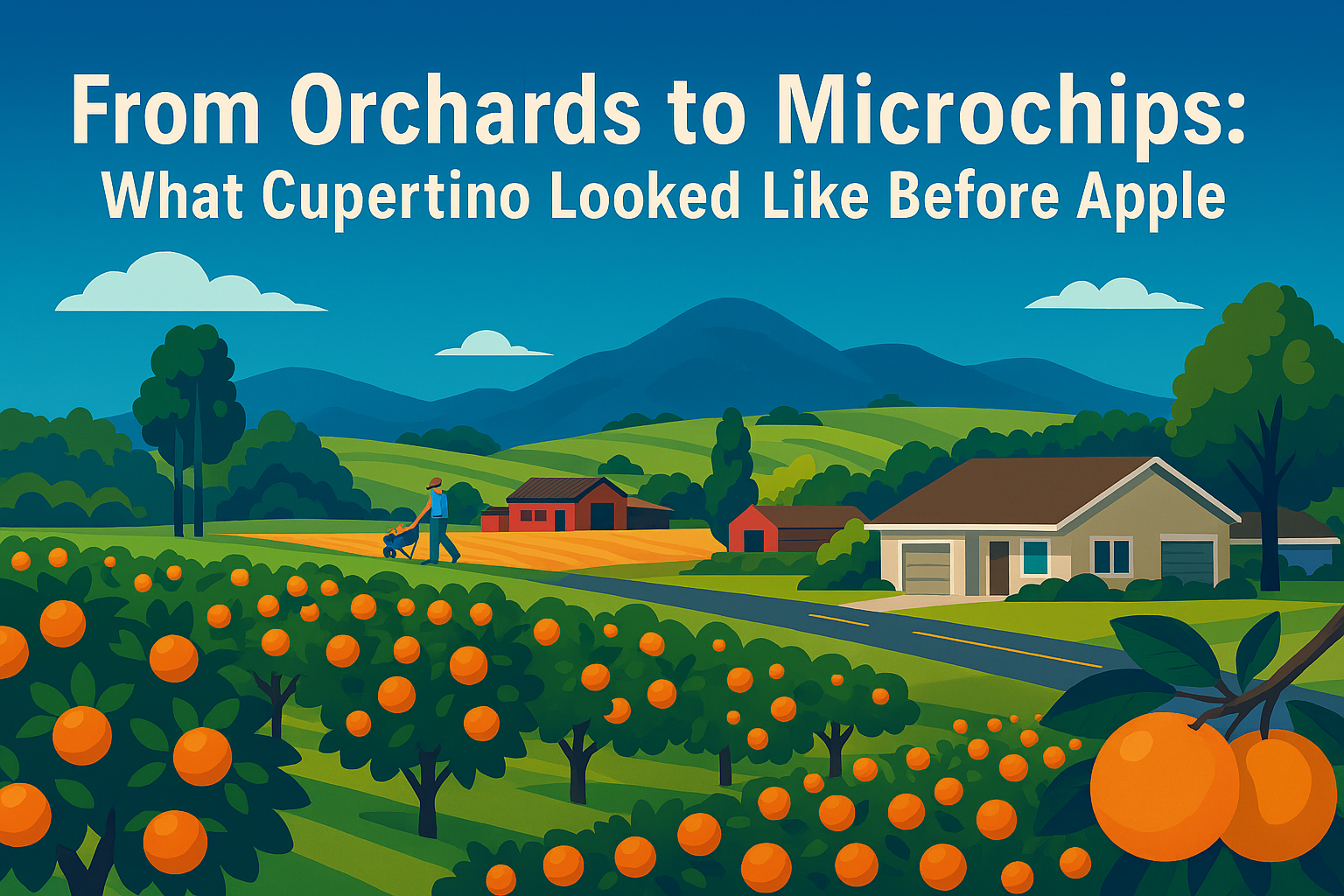
Before Apple Park’s shimmering ring rose from the ground, before the iPhone reshaped global culture, and long before Cupertino became a pilgrimage site for tech enthusiasts, the city was something entirely different: a quiet agricultural town filled with orchards, canneries, and the scent of ripening fruit.
Understanding what Cupertino looked like before Apple isn’t just nostalgia — it reveals how dramatically Silicon Valley transformed in just a few decades, and how unlikely its rise truly was.
🌳 The Valley of Heart’s Delight
For most of the 20th century, the Santa Clara Valley was known as the Valley of Heart’s Delight, one of the most productive fruit‑growing regions in the world. Cupertino was at the center of it.
The landscape was a patchwork of:
- apricot orchards
- plum and prune trees
- cherry groves
- small family farms
- fruit drying yards and packing sheds
Seasonal rhythms shaped life. Spring blossoms drew visitors from across California. Summers meant long days of harvesting. Kids earned pocket money picking prunes — including, famously, a young Steve Jobs, who grew up just a few miles away.
🏡 A Small Town With Big Open Spaces
Before the tech boom, Cupertino was a rural community with:
- fewer than 10,000 residents
- two‑lane roads
- modest ranch‑style homes
- wide stretches of farmland between neighborhoods
The city didn’t even incorporate until 1955. There were no corporate campuses, no venture capital firms, no sleek cafés filled with engineers debugging code. Life was slower, quieter, and deeply tied to the land.
🧪 The First Signs of Change
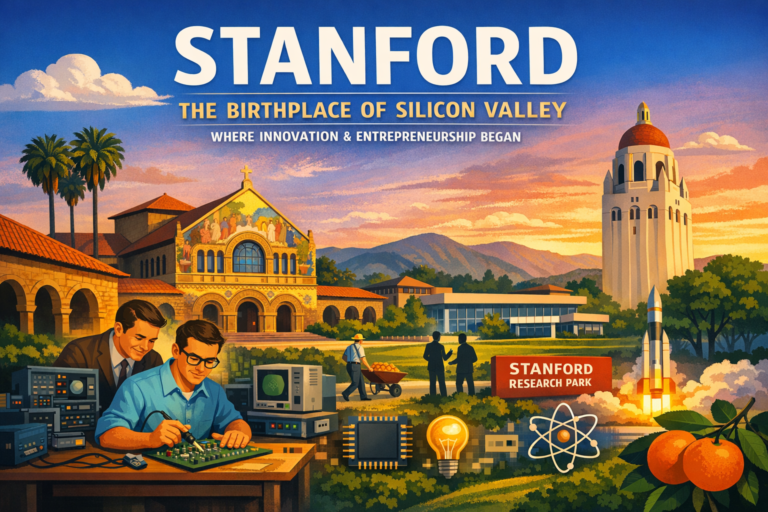
The seeds of transformation were planted not in Cupertino itself, but nearby — at Stanford University and in the emerging semiconductor industry.
By the late 1950s and early 1960s:
- Hewlett‑Packard was growing in Palo Alto
- Fairchild Semiconductor was spawning the “Fairchildren”
- Defense contracts were pouring into the region
- Stanford Research Park was attracting new tech firms
Cupertino remained agricultural, but the world around it was shifting. Orchards began giving way to subdivisions. New schools were built. The population surged.
Still, no one could have predicted what would come next.
🍏 Then Came Apple
In 1976, two young men from the nearby suburbs — Steve Jobs and Steve Wozniak — built a computer in a garage. Within a few years, Apple moved its headquarters to Cupertino.
That decision changed everything.
Apple didn’t just bring jobs. It brought:
- global attention
- new infrastructure
- waves of engineers and entrepreneurs
- a shift from agriculture to high‑tech economy
By the 1990s, most orchards were gone. By the 2000s, Cupertino was synonymous with innovation. And in 2017, Apple Park — a futuristic campus the size of a small city — opened on the site of a former Hewlett‑Packard campus.
The transformation was complete.
🔄 What We Lost — and What We Gained
Cupertino’s evolution mirrors the story of Silicon Valley itself: a region that reinvented its identity in a single generation.
Lost:
- family farms
- fruit orchards
- small‑town rhythms
- agricultural heritage
Gained:
- one of the world’s most influential companies
- a global hub of innovation
- a diverse, international community
- a new economic engine
The shift wasn’t smooth or simple, but it reshaped the world.
🌐 Why This History Matters
Understanding Cupertino before Apple helps us see Silicon Valley not as an inevitable outcome, but as a remarkable convergence of:
- geography
- talent
- timing
- risk‑taking
- and a willingness to reinvent